- Log of the Moira
- Finding the Thread
- Cruising Asia
- Cruising the Solomon Islands
- Cruising Australia Part 1
- Cruising Papua New Guinea
- Pearls, Pearls, Pearls
- What Am I Doing Here?
- Black, White and Grey in Paradise
- Dubious Mission to Tagula
- Words Appart
- Rascals in Paradise
- Pearl Diving in Doga Sui Sui Pass
- American Spies
- The Giant Man Eating Octopus
- The Great Ebony Caper
- The Uplift Factor
- Planned Failure
- A Tangled Web
- Opposition
- Midnight Sun
- Lapi in the Isles of Love
- Unchartered Waters
- Unnamed Island
- The Isles of Love
- Earthlings
- Nothing Atoll
- Super-Organisms in Time Lapse
- People of the Sea
- Coral Fires Burning
- Symbiotic Coral Megabeasts
- Symbiosis
- A Handy Experiment
- Destiny in Action
- Keops and Kaleidoscopes
- Poisoned and Dying in Sidea
- Dire Straits
- PNG Update
- Cruising Australia Part 2
- Ancient Respected Oracle
- Eye of the Dolphin
- Sydney Dolphin Cult
- Water Wings
- Sydney Dolphin Connection
- Sydney's Dolphinarium
- Dolphin communication
- Starlight Starbright
- Captive Dolphins
- Politics of dolphin liberation
- Sun Heralds Sydney Dolphins
- 40 foot swimming pool
- Media Dolphin Campaign
- Government Goo
- Dolphins in captivity
- Dolphin Referendum
- Australian Media Campaign
- Dolphins to die
- Orcas Visit Moira
- Dolphin Update
- Man and Dolphin
- Cruising New Caledonia
- Cruising Fiji
- Cruising Samoa
- This Magic Sea
- We are
- Awareness
- Learning
- We Voyage This Magic Sea
- Bound for Knowledge
- Beyond Perceptual Horizons
- Facts of Life
- Intercommunications
- Sea's Communication Webs
- Appearing
- 4 Phase Process of Becoming
- Thread of Awareness
- Error of Expectations
- Change of Expectations
- Mind
- Learning
- Fields of Perception
- Guides
- Tides
- Thread of Awareness
- Contact The Moira
E-BOOK VERSIONS
Enjoy these adventures on your ebook reader and help support the Thread of Awareness network of websites by downloading the Log of The Moira ebooks in epub and mobi formats for €5 per ebook or €10 for all three ebooks.
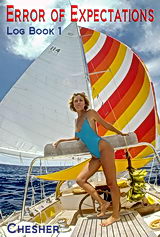
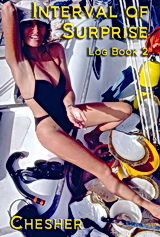
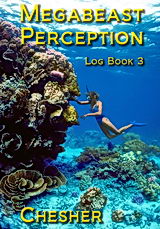
The Complete Series of all three ebooks.
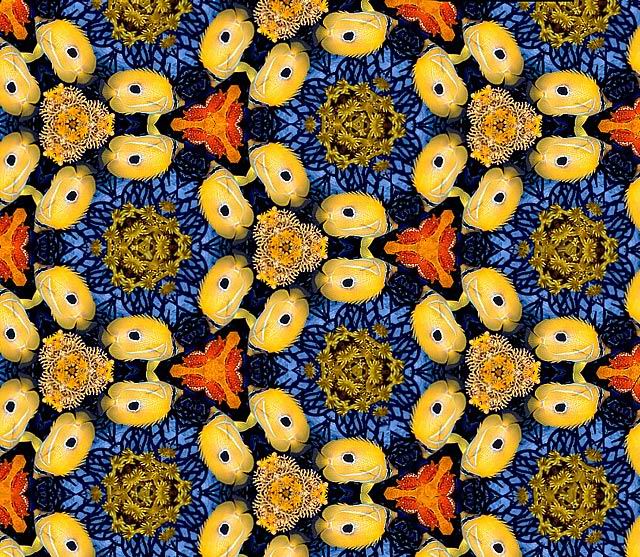
Dephasing Instrumentation
Kaleidoscopes and Teleidoscopes
Sir David Brewster, an Scottish Optical Physicist at Edinburgh University, invented Kaleidoscopes in 1816.
He invented the word, too, from the Greek Kalos, beautiful + eidos, form; + skopos to view. He was investigating the polarization of light when he stumbled upon the remarkable kaleidoscopic effect that emerges when looking down the long axis of three mirrors arranged in an equilateral triangle.
Sir David set up a large factory and sold 200,000 in Paris and London in three months. They were quality instruments, precision made from silver and bronze. For many years kaleidoscopes captured the fascination of the world, then cheap imitations began to appear and the quality declined. Radio, and other forms of entertainment lead to the demise of Sir David's kaleidoscopic empire. Kaleidoscopes have always been a popular toy, and cheap imitations have continued to fascinate children down through the years.
Today a few people, who do not want to see our planet deprived of such a fabulous creation, make good ones again. Using modern ultra-flat high reflective mirrors today's kaleidoscopes are breathtaking.
Why are kaleidoscopes so fascinating? They are solid state hand held virtual reality devices to demonstrate all about synergy and change and how larger patterns are created by little patterns repeated over and over again. They teach us about fascination, about surprise, and that, of course, is what awareness is. Which is why it all seems so familiar when we peer into one.
After looking through a good kaleidoscope, the first thing you'll want to know is how they work. This is why so few of David Brewster's kaleidoscopes became antiques.
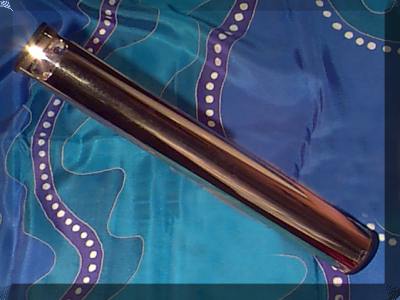
Kaleidoscopes have a small chamber with bits of reality in it - Moirascopes, the ones I make, have rare tiny shells, exotic antique glass, even jewels.
You look through a hole at one end of the tube at the bits at the other end. The tube is lined with three mirrors. They have to be front surface mirrors (with the silvering on the reflecting side, most mirrors have the silvering on the back side of the glass).
The three mirrors are all the same width , cut to just slide into the tube to form an equilateral triangle.
Most Kaleidoscopes have a frosted glass behind the objects so you look through them, which is why most kaleidoscopes have bits of glass and other transparent or translucent objects. You see the objects in the triangle formed by the three mirrors and you see them reflected in the mirrors again and again and again in an infinite pattern.
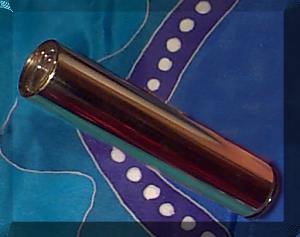 Teleidoscopes
are kaleidoscopes that have a lens system
to focus an image of the world into the triangle
of mirrors. I call mine a reality scope, but
mine is special. You simply can't even imagine
what the world looks like through a reality
scope. I mean you can't, you really can't
imagine.
Teleidoscopes
are kaleidoscopes that have a lens system
to focus an image of the world into the triangle
of mirrors. I call mine a reality scope, but
mine is special. You simply can't even imagine
what the world looks like through a reality
scope. I mean you can't, you really can't
imagine.
You can see, in the kaleidoscopic images I have on this web site, how an equilateral triangle makes up into a really spiffy matrix. Click here to run through some. Click on each images after it downloads to go to the next image. You will return here on the last click.
That is absolutely nothing compared to viewing reality - flowers, waves, rivers, people - through a teleidoscope or a reality scope. They change motion into something that has to be seen before you can get a mental image of it. I'm working on including some in the next upgrade of this website.
Just to get an idea, order the delightful - I mean really excellent - program called Photo Echoes.
This program will kaleidoscope any image on your computer and can be set up as an animated screensaver randomly kaleidoscoping images in a folder of your choice. It's an excellent program and if you like kaleidoscopes, download it right now.
Reality scopes are much more mind boogling because they kaleidoscope the real world in real-time revealing patterns of awareness that you could never ever imagine or predict.
You can probably find a good quality kaleidoscope and possibly a teleidoscope in most big cities these days. Check out the adventure and nature type shops. There is a place in San Francisco called the Light Opera that has a huge selection. But they don't have my hand made ones.
To get one of my Moirascopes you have to order one from me because I hand make them.