- Log of the Moira
- Finding the Thread
- Cruising Asia
- Cruising the Solomon Islands
- Cruising Australia Part 1
- Cruising Papua New Guinea
- Pearls, Pearls, Pearls
- What Am I Doing Here?
- Black, White and Grey in Paradise
- Dubious Mission to Tagula
- Words Appart
- Rascals in Paradise
- Pearl Diving in Doga Sui Sui Pass
- American Spies
- The Giant Man Eating Octopus
- The Great Ebony Caper
- The Uplift Factor
- Planned Failure
- A Tangled Web
- Opposition
- Midnight Sun
- Lapi in the Isles of Love
- Unchartered Waters
- Unnamed Island
- The Isles of Love
- Earthlings
- Nothing Atoll
- Super-Organisms in Time Lapse
- People of the Sea
- Coral Fires Burning
- Symbiotic Coral Megabeasts
- Symbiosis
- A Handy Experiment
- Destiny in Action
- Keops and Kaleidoscopes
- Poisoned and Dying in Sidea
- Dire Straits
- PNG Update
- Cruising Australia Part 2
- Ancient Respected Oracle
- Eye of the Dolphin
- Sydney Dolphin Cult
- Water Wings
- Sydney Dolphin Connection
- Sydney's Dolphinarium
- Dolphin communication
- Starlight Starbright
- Captive Dolphins
- Politics of dolphin liberation
- Sun Heralds Sydney Dolphins
- 40 foot swimming pool
- Media Dolphin Campaign
- Government Goo
- Dolphins in captivity
- Dolphin Referendum
- Australian Media Campaign
- Dolphins to die
- Orcas Visit Moira
- Dolphin Update
- Man and Dolphin
- Cruising New Caledonia
- Cruising Fiji
- Cruising Samoa
- This Magic Sea
- We are
- Awareness
- Learning
- We Voyage This Magic Sea
- Bound for Knowledge
- Beyond Perceptual Horizons
- Facts of Life
- Intercommunications
- Sea's Communication Webs
- Appearing
- 4 Phase Process of Becoming
- Thread of Awareness
- Error of Expectations
- Change of Expectations
- Mind
- Learning
- Fields of Perception
- Guides
- Tides
- Thread of Awareness
- Contact The Moira
E-BOOK VERSIONS
Enjoy these adventures on your ebook reader and help support the Thread of Awareness network of websites by downloading the Log of The Moira ebooks from Amazon.

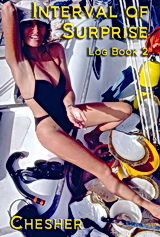
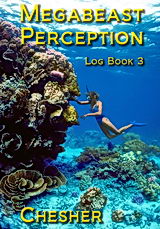
The Complete Series of all three ebooks.
Surprise>

Om Mani Padma Hum was, I think, the first time the science of cognition was put into symbols.
Although the symbols look and sound like words to us, today, they are much older than modern conceptual words. I believe the sounds were around when humans were just learning to speak.
The important thing is that some of the early people understood the process the signals represent.
What is surprising, beyond belief, is that after all this time only a handful of people understand what this formula represents and that our "science" has no widely accepted consensus on the process.
Was the knowledge always difficult to comprehend or did many of our ancient ancestors understand the process?
I believe, along with Julian Jaynes, that our modern day conscious mind is a relatively new invention, perhaps no more than 4000 years old. I also think this consciousness awoke without having the organic understanding about Om Mani Padma Hum and is having a hard time learning. Our bright new consciousness is based on written language. On words. Om Mani Padma Hum are not words, but a collection of mantras. Their "definitions" are so profound that the modern conscious mind can't get a grip on them. For us words are generally very circumscribed concepts focused on nouns. None of the symbols in the phrase Om Mani Padma Hum are nouns or adjectives or adverbs, or even verbs.
I brood about this because I suspect that no matter how hard I try, or anyone tries, it will be difficult or impossible to get very many people to understanding the concepts because linguistic censorship prevents us from grasping the fullness of these ideas. I have four favorite authors who have done a remarkable job of trying.
-
Guy Murchie. I flew right round planet earth to spend a few days talking with Guy. His books, Music of the Spheres, and the 7 Mysteries of Life are a very clear, very special explanation of the phenomina of being. Chances are you have never heard of him or his books.
-
Fritjof Capra. I have all his books, and his latest, Web of Life, is almost exactly what I was trying to write - before. He's a good writer and has it all just about perfect. But as far as I know his book is not changing the world. I gobbled it up but it's not for the novice.
-
Lama Anagarika Govinda. His, Foundations of Tibetan Mysticism, is vastly different from other writings about Eastern philosophy. Really neat stuff, and by far the best direct analysis of Om Mani Padma Hum in existence.
-
Lewis Thomas. Whom everyone (except Freddy) adores. The man can really write and he is really right. You read Lewis Thomas (Lives of A Cell, The Medusa and the Snail) with a big grin on your face. His stuff sells. But sometimes I wonder if he is so entertaining the reader does not realize what he is really saying.
-
Buckminster Fuller. I know, I said 4 favorite authors and here is Fuller, number 5. He's not a favorite author. In his opus, Synergetics, he deliberately made everything as difficult as possible to comprehend so the reader would pay attention. Nobody did. Dedicated Cognition Sleuths who did wade through Synergetics misquote him and misunderstand him. If you can hack through the fog, he's 100% right on. But you'd better already know what he's trying to say before you hunker down with Fuller.
There are others. All of them saying more or less the same thing in different ways, using different examples, reaching back before the ancient Greeks into the mysts of Tibet.
Part of the problem is that reality keeps getting blurred by authors like James Redfield (The Celestine Prophecy), Rupert Sheldrake (The Rebirth of Nature), and Lyall Watson (LifeTide). These guys are popular. I like to read them, too. And they are nearly right. Almost.
James Redfield is the the most popular because he is unabashedly fiction.
Lyall Watson is the best writer and the worst for the science of cognition because he is so close to the truth, but has not yet come out of the closet. Love to read him, though.
Rupert Sheldrake deserves a medal. His is one of the few books ever to be acclaimed in Science (the prestigious journal of the American Association for the Advancement of Science) as one that should be burned. That's serious praise in my view.
Duane Elgin's Awakening Earth has most of the ideas intact but his writing is professorial dull.
But like so many authors in this field, these guys are trapped by the mind / matter syndrome. Other dimensions kind of stuff. Another plane of existence luring us on, directing us, mysteriously. Not much different, really, from God in Heaven or on Olympus, or from old myths like the Moirae.
There are indeed control systems, much like Rupert says. But they are not in any other dimension, unless we call the layers of languages dimensions.
Life creates control webs by communications. Like our minds emerge from the communications of our cells. When you finally "get" the idea of life as a dynamic, non-linear flow of intercommunication, the "other" dimensions turn out to be inventions; reality partitioned by language so we can intercommunicate about the subject.
Lots of the error of our expectations comes from our failure to model emergent properties very well. Fuller pointed this out. It's what his book Synergetics is supposed to be, a model for emergent properties of intercommunicating beings.
-
Emergent as in a coherent mind (yours) emerging by the behavior of your 100 trillion cells.
-
Or a coherent mind (ours) emerging from the behavior of us 6 billion hominids and our associated trillions of co-dependant plants and animals.
-
The properties of the emergent communication system, complete with feedback loops, are, as Fuller says, unpredictable. We have trouble with his predictive model of the intangible, unpredictable, emergent system.
-
In fact, the only time we become aware of emergent properties is when they surprise us.
Robert Anton Wilson (The Cosmic Trigger) has fun with the whole idea of emergent control systems, without ever getting scientific or religious about them. He's good. Maybe I have 5 favorite authors after all.
I don't think any author is going to crack this nut because I think virtually every living creature already knows about the thread of awareness in chaos, autopoiesis, or whatever we want to call the process of being. If Buddha could work it out thousands of years ago sitting under a fig tree, smiling, anybody can (he said the same thing).
The point is
understanding is an experience
As I pointed out in the expedition briefing, The Thread of Awareness is not an idea hidden off in some other dimension. It's something you are experiencing right now. And it's no use explaining - this way or that - if your mind dodges that way and this to avoid letting consciousness in on the experience.
This brings me to the surprise.
Gregory Bateson, in Mind and Nature; a Necessary Unity, wrote that awareness was created by "news of a difference." He was impressed by difference. Information, said Gregory, is a difference that makes a difference.
Humberto Maturana, who knew Bateson, did not agree. He said mind was created by "perception of a difference." There is a difference in perspective here.
I prefer "Error of Expectation" to define awareness, because I wanted to focus on the idea of the processes creating awareness. The term stresses the fact that living beings have an expectation based on an imagined cyclic existence and the fact that there are no such things as perfect cycles.
I wanted to highlight awareness as the failure of expectations when the news of a difference arrives. I also wanted to focus on awareness (the error of expectation) as a control - an on off switch - that activates and creates the flow of perception, memory, response (mind).
Error of Expectation is, like Perception of a Difference, or News of a Difference, a bit stuffy. There is a much easier word.
Surprise. Derived from sur - above + prendre, to take. To take unawares, to attack from above without warning, to cause to wonder because of the unusual, to cause someone to do something unintended. There is an act of surprise. The state of being surprised. Something that surprises. We can be surprised by failure or by success; by error or correctness. It's a cognate of wonder.
There are levels to surprise. Astonish is a big surprise, so big we don't even believe it. Amaze; surprised into confusion. Astound; surprised into helplessness. Flabbergasted; surprised into speechlessness.
So from now on, surprise.