- Log of the Moira
- Finding the Thread
- Cruising Asia
- Cruising the Solomon Islands
- Cruising Australia Part 1
- Cruising Papua New Guinea
- Pearls, Pearls, Pearls
- What Am I Doing Here?
- Black, White and Grey in Paradise
- Dubious Mission to Tagula
- Words Appart
- Rascals in Paradise
- Pearl Diving in Doga Sui Sui Pass
- American Spies
- The Giant Man Eating Octopus
- The Great Ebony Caper
- The Uplift Factor
- Planned Failure
- A Tangled Web
- Opposition
- Midnight Sun
- Lapi in the Isles of Love
- Unchartered Waters
- Unnamed Island
- The Isles of Love
- Earthlings
- Nothing Atoll
- Super-Organisms in Time Lapse
- People of the Sea
- Coral Fires Burning
- Symbiotic Coral Megabeasts
- Symbiosis
- A Handy Experiment
- Destiny in Action
- Keops and Kaleidoscopes
- Poisoned and Dying in Sidea
- Dire Straits
- PNG Update
- Cruising Australia Part 2
- Ancient Respected Oracle
- Eye of the Dolphin
- Sydney Dolphin Cult
- Water Wings
- Sydney Dolphin Connection
- Sydney's Dolphinarium
- Dolphin communication
- Starlight Starbright
- Captive Dolphins
- Politics of dolphin liberation
- Sun Heralds Sydney Dolphins
- 40 foot swimming pool
- Media Dolphin Campaign
- Government Goo
- Dolphins in captivity
- Dolphin Referendum
- Australian Media Campaign
- Dolphins to die
- Orcas Visit Moira
- Dolphin Update
- Man and Dolphin
- Cruising New Caledonia
- Cruising Fiji
- Cruising Samoa
- This Magic Sea
- We are
- Awareness
- Learning
- We Voyage This Magic Sea
- Bound for Knowledge
- Beyond Perceptual Horizons
- Facts of Life
- Intercommunications
- Sea's Communication Webs
- Appearing
- 4 Phase Process of Becoming
- Thread of Awareness
- Error of Expectations
- Change of Expectations
- Mind
- Learning
- Fields of Perception
- Guides
- Tides
- Thread of Awareness
- Contact The Moira
E-BOOK VERSIONS
Enjoy these adventures on your ebook reader and help support the Thread of Awareness network of websites by downloading the Log of The Moira ebooks from Amazon.
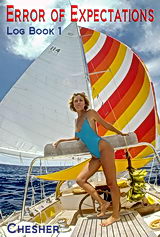

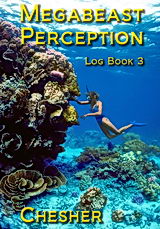
The Complete Series of all three ebooks.
Richard's 3 Step
Here is an important ancient secret I discovered all by myself. It's like the two papaya rule on the American Samoan driver's licence exam.
Question: "What is the Two Papaya Rule?"
Answer: When you drive behind another car you watch for the car to pass something on the road and count one papaya, two papaya. If you pass the same thing on the road before you get finished counting, you are following too close. Back off.
I didn't make this up, it really is on the American Samoa driver's license exam and no matter how fast you are going, the two papaya rule works. Count three papayas if it is raining. And the speed limit in American Samoa is 35 miles per hour, too.
What I discovered was this.
If you walk (or run) three steps
----- left
- right - left ------ while breathing in and
----- right - left - right ------- while
breathing out,
your heart beat will synchronize with your footfalls.
Unlike the two papaya rule it does not work if you go too slow. You have to be exercising, walking uphill, jogging, climbing stairs. If you can comfortably take four steps to a single breath you are simply not exercising and might as well do something else. This is medically true, too.
If you go too fast you won't be able to comfortably take three steps while inhaling and three while exhaling (six steps per breathing cycle). Overdo it and you will need two or maybe even one breath per step (panting, it's called).
Richard's three step.
Try it. If you run fast, your left-right-left will be fast and so will your heart beat and your breathing.
WARNING: You can overdo this. We each have our own coronary speed limit. The objective of exercise is not to blow out your artery walls, but to get the pump up and running for at least 20 minutes. Never push yourself to the point where you feel uncomfortable. I read alot about this stuff and can tell you straight it's essential to exercise a minimum of three times a week for at least 20 minutes. You can find out exactly what rate your heart should be pumping for your age and sex from the following table:
Age |
Heartbeats per 10 seconds. | |
Minimum |
Safe Maximum |
|
25 |
23 |
30 |
30 |
22 |
29 |
35 |
22 |
28 |
40 |
21 |
27 |
45 |
21 |
27 |
50 |
20 |
26 |
55 |
19 |
25 |
60 |
18 |
24 |
65 |
18 |
23 |
70 |
17 |
22 |
I give the heartbeats per ten seconds because that's faster and easier to count or time compared to heartbeats per minute. Go below the minimum and you are not doing much for yourself.
Over the safe maximum (these figures are 90% of the maximum recommended heartbeat for each age) you are inviting a cramp. You really don't want a cramp in your ticker, it gets everybody upset.
If you are not already exercising, consult a good physiotherapist or aerobics instructor first. Or your doctor, if you suffer from high blood pressure, dizziness, blackouts, diabetes, back pain, arthritis or heart disorders. (If you suffer from these it is probably because you have not been exercising or eating right).
Buy the best cross training shoes you can afford. Good running (or walking) shoes are a delight. Nothing gets in the way of mental exploration more than painful knees or feet.
Doing it:
-
Walk uphill or walk very fast or jog and then, as you begin to breathe more rapidly, start Richard's Three Step.
Begin with the left foot.
Breathing in (left right left). Breathing out (right left right).
-
In (one two three), out (one two three). You can count to yourself till you get it right. The heart beat and number of steps per ten seconds will be the same, say 20. That's two steps per second and two heartbeats per second, too. I check this by feeling the pulse in my throat while walking or stop and count my pulse for ten seconds. Just keep on doing this. It will eventually become second nature to your walking or jogging and you can go uphill, downhill, jog or walk fast with the pace and heart in perfect harmony.
-
If you go uphill, don't break the rhythm by slowing your steps. Your heart rate is going to increase uphill. Keep the same number of steps per second but take smaller steps, as if you were downshifting to a lower gear. (This is hard to do on stairs, but easy on slopes). The steeper the hill, the smaller the steps.
-
Alternate walking at a good clip and jogging as needed to keep the pulse/breating at the correct rate.
This is a very basic exercise, but important to the program. There are lots of variations and expansions to Richard's three step.
You might also save your life with the two papaya rule.